Rolly Rush
A physics-based marble runner for iOS and Android — and a remake of the first game I ever released, Rollin' Crazy, which I built at 13 years old.
video
screenshots

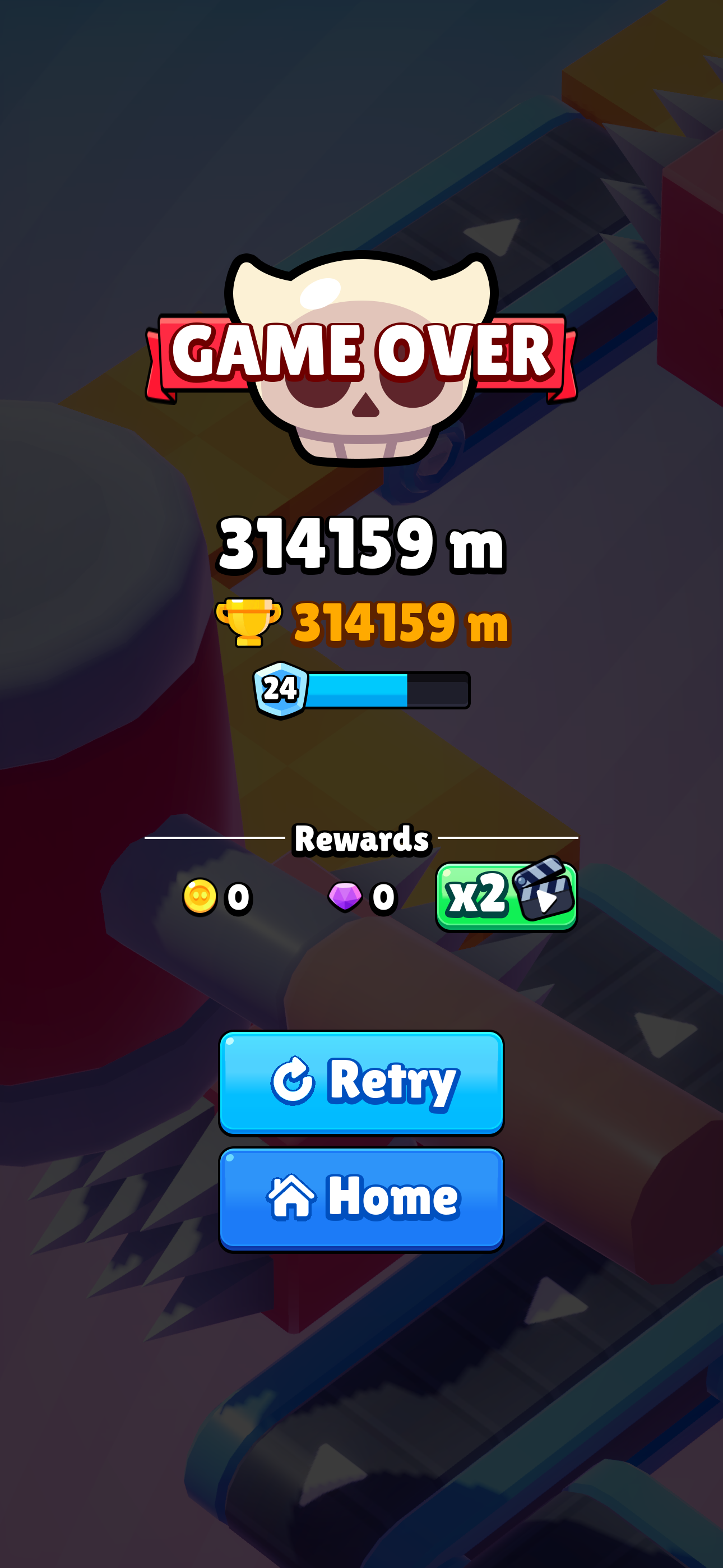
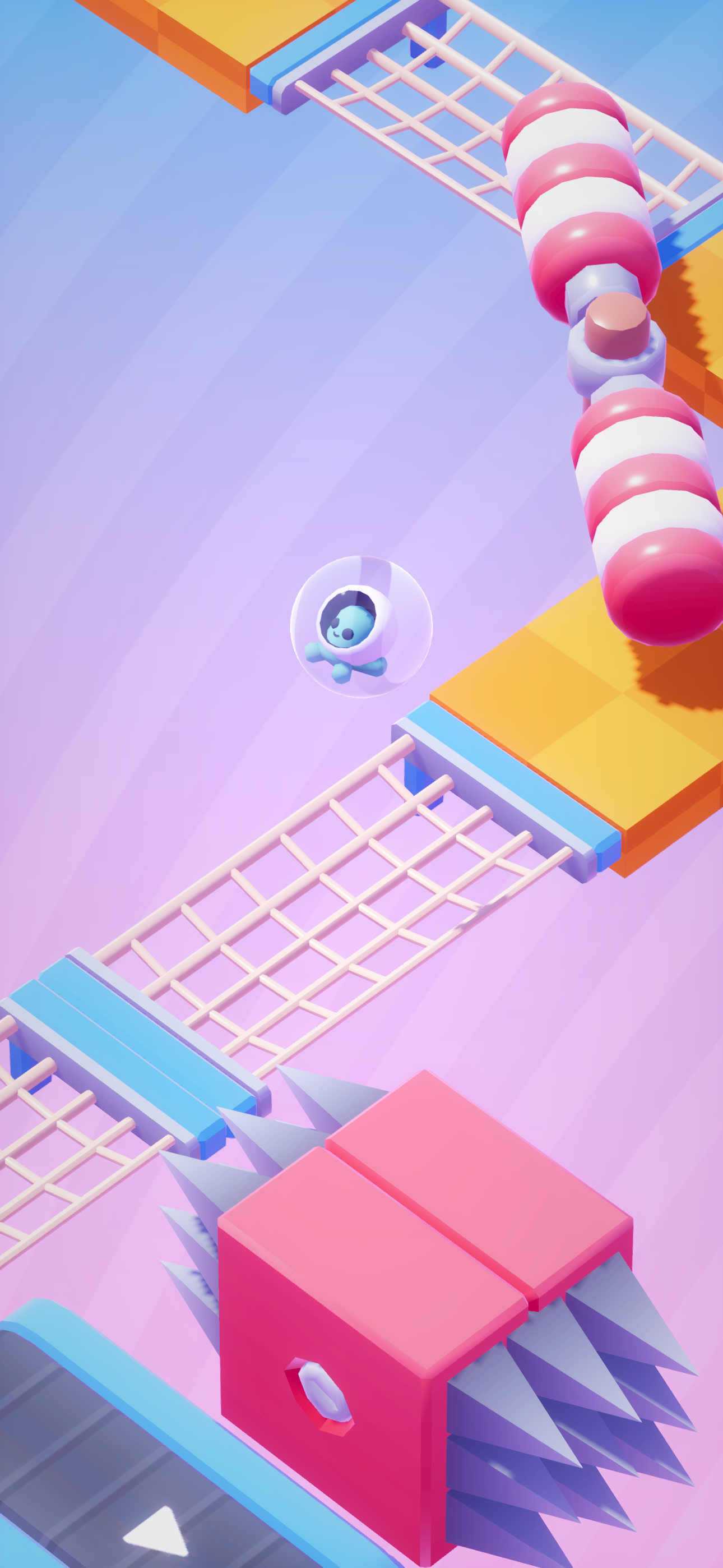
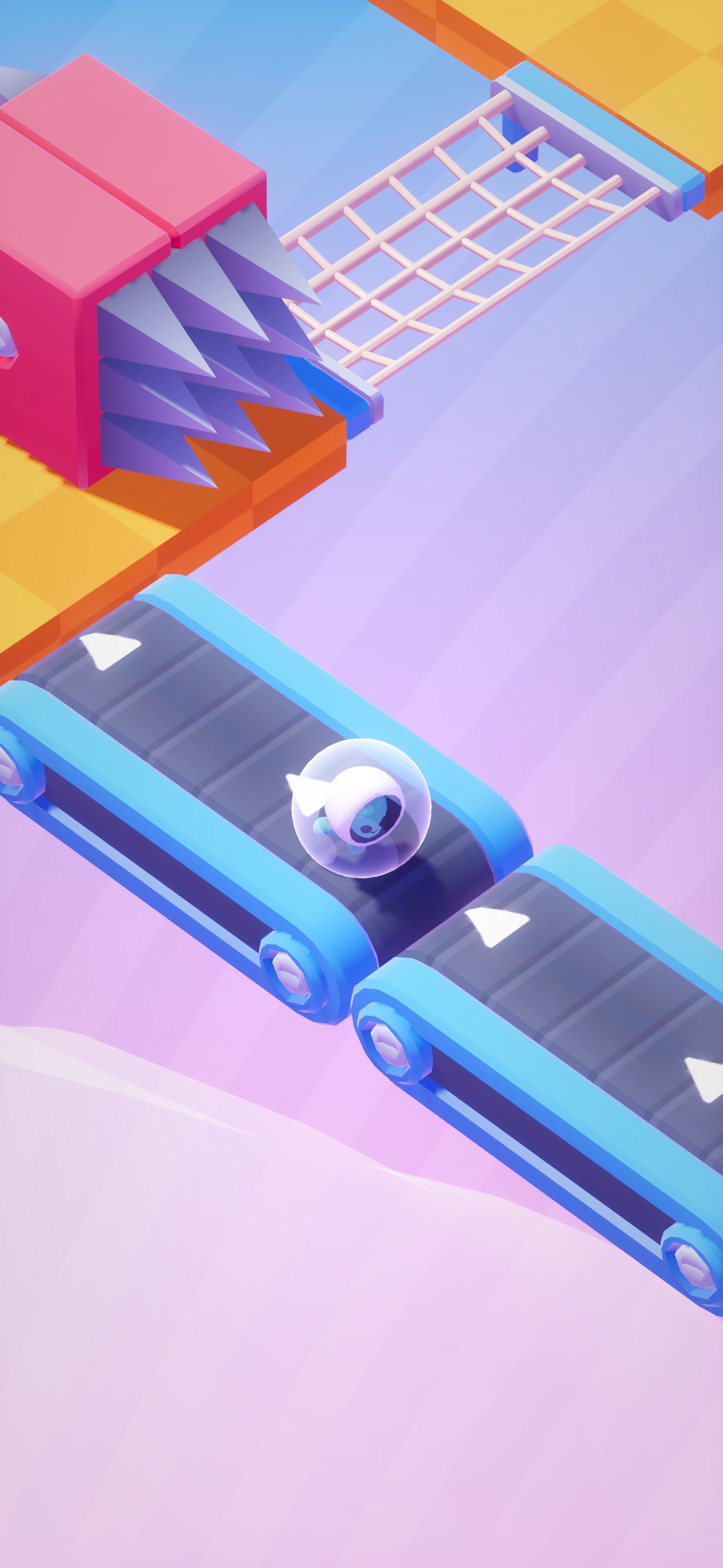
about
About the Project
RollyRush is a remake of Rollin' Crazy — an infinite runner for iOS that I built and released at 13 years old. When it came out, everyone at my school was playing it. It had Game Center leaderboards, and the competition for the highest score spread through the school like wildfire. That response — watching people genuinely enjoy something I'd made — is what made me want to pursue game development as a career.
RollyRush is a reimagining of that original idea, inspired by Marble Blast Ultra and Crossy Road. You control a physics-driven marble rolling through an infinite obstacle course — conveyor belts, trampolines, punching bags, swinging hammers, springs and more — rolling as far as you can before the obstacles get the better of you. The goal is the same as it was back then: one more run, one more metre, beat your highscore.
The Physics
The ball physics are the foundation of everything. For the first two weeks of development I did nothing but tweak the physics on a small test map — mass, friction, damping, impulse response — until it felt right. I had family members playtest it repeatedly until the movement felt intuitive and satisfying to people who'd never played it before. Getting that right before building anything else was the best decision I made on this project.
Features
Procedurally generated infinite levels built from a handcrafted set of obstacle prefabs, physics-driven marble movement tuned over two weeks of iteration, a varied obstacle set including conveyor belts, trampolines, punching bags, swinging hammers and springs, and a mobile-first design targeting iOS and Android.
tech breakdown
Built in Godot using a mix of GDScript and C#. The project was partly a personal challenge to test what I'd learned in Godot after coming from Unity and UE5.
The most interesting technical challenge was the procedural level generation. Defining a ruleset that would reliably produce levels that were fun — not just technically valid — from a set of prefab obstacles took significant iteration. Each obstacle type has its own placement rules, spacing requirements, and difficulty weighting, and the generator has to combine them in a way that feels handcrafted rather than random.
what i learned
Remaking a project you built as a child is a strange experience. The original Rollin' Crazy was built with almost no knowledge of game development — just enthusiasm and trial and error. Coming back to the same idea with years of professional experience has been both humbling and satisfying. The core loop is simple, but making it feel good is genuinely hard.
The two weeks spent on physics alone before touching any other system was one of the best development decisions I've made. It's tempting to rush to content, but if the core feel isn't right, nothing else matters. Every hour spent on the physics paid back tenfold when it came to building levels around it.
Procedural generation that produces fun levels — not just valid ones — is a design problem as much as a technical one. The ruleset isn't just about what's allowed; it's about what makes a good sequence of challenges. That distinction took a while to internalise.